'Cold water shock can happen to the best swimmers'

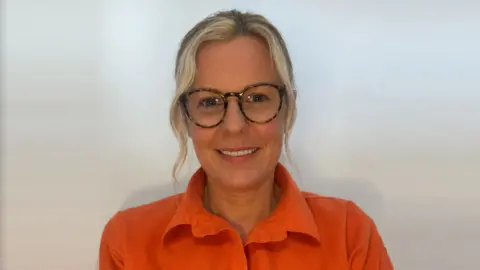 Glynis Sheppard
A swimming teacher has warned open water can be unpredictably cold and people should not be tempted to cool off in lakes and reservoirs in the heat.
Glynis Sheppard said her thoughts were with bereaved families, after at least 15 water-related deaths in the UK during the recent heatwave.
Sheppard, who has taught swimming in Shropshire for about 30 years, added to warnings about hazards, including cold water shock, where breathing rates can change uncontrollably.
"Cold water shock can happen even if you are the greatest swimmer in the world," she said.
The Shrewsbury mother said teenagers in particular may want to swim in outside spots because their friends do, but they should avoid the dangers.
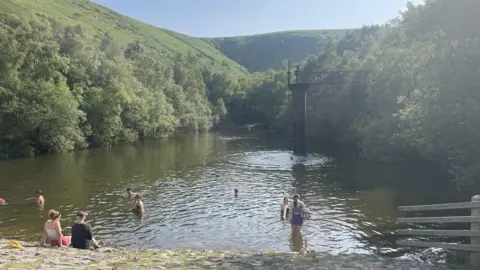
"Even on really hot days the open water can be extremely cold. That is the problem," she said.
"Cold water shock can take hold from 15 degrees [Celsius] and below and typically your lakes and your reservoirs are going to be 10 to 15, maybe 16 at a push."
Sheppard advised parents and carers to "keep having those open conversations with all your children, but more so with teenagers".
"Because they go out on their own, don't they, at this age, that is the issue," she said.
"When they are really little they can hold your hand when you are walking round the lakes or whatever, but when they are teenagers they are going out on their bikes or with a group of friends, I think to have that open conversation with them all the time."
Sheppard added water safety conversations can also take place more often in schools.
"If they can just give a five-minute talk in assembly about it, it would be absolutely amazing, or get people in to talk," she said.
Sheppard described school swimming lesson provision as a "bit of a grey area" in the country, but said Shropshire was among counties where most primary schools took their pupils swimming.
She said some schools in the area had also been using "pop-up pools" recently.
"We are really lucky in Shropshire as a county because a lot of the secondary schools have got swimming pools which is actually quite rare," she added.
Sheppard, the founder of Swim with Style, said its basic safety training when children start includes getting in and out of water safely, how to float and how to call for help.
West Midlands Ambulance Service has said each year people in its patch are injured or lose their lives in water-related incidents.
Invisible hazards can include the depth and temperature of the water, currents as well as rocks and drains under the surface, it warns.
Follow BBC Shropshire on BBC Sounds, Facebook, X and Instagram.